From Sea Farm to Table: Farmers MAI-Kit Brings Aquaculture to Your Kitchen


This blog post was written by Emily Whitmore, associate director at Maine Aquaculture Innovation Center.
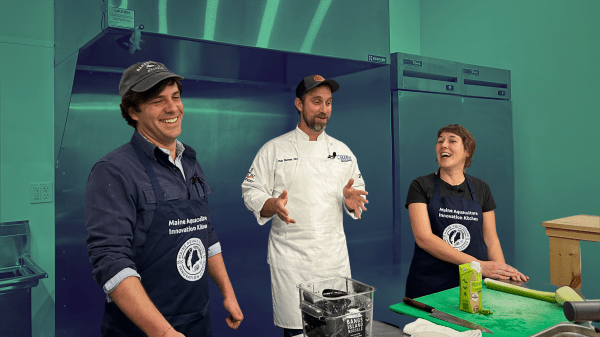
What do oysters, kelp, mussels, and salmon have in common? Besides tasting delicious, they’re all sustainably farmed in Maine—and now they’re the stars of a new series connecting local farmers, chefs, and home cooks. Created by the Maine Aquaculture Innovation Center (MAIC), Farmers MAI-Kit—short for the Maine Aquaculture Innovation Kitchen—is an interactive cooking series that’s designed to bring together some of the state’s top aquaculture producers and culinary talent in a series of live-streamed events. Each episode showcases a different locally farmed seafood product and walks viewers through how to prepare it in their own kitchens. It’s a farm tour, cooking class, and storytelling session all rolled into one.
But this isn’t just about recipes (though the kelp puttanesca is a must-try!). It’s about building a deeper connection between the public and Maine’s working waterfront. By seeing the people behind the food, viewers learn how aquaculture supports local communities, protects working waterfronts, and provides a sustainable source of protein.
Farmers MAI-Kit also serves a broader purpose: aquaculture literacy. Supported by the eeBLUE Aquaculture Literacy Mini-Grants Program, the project gives audiences an up-close look at how Maine’s seafood is grown. Each episode features a virtual farm tour and conversations with farmers about their operations, farming practices, and what it takes to raise high-quality, sustainably-grown food.
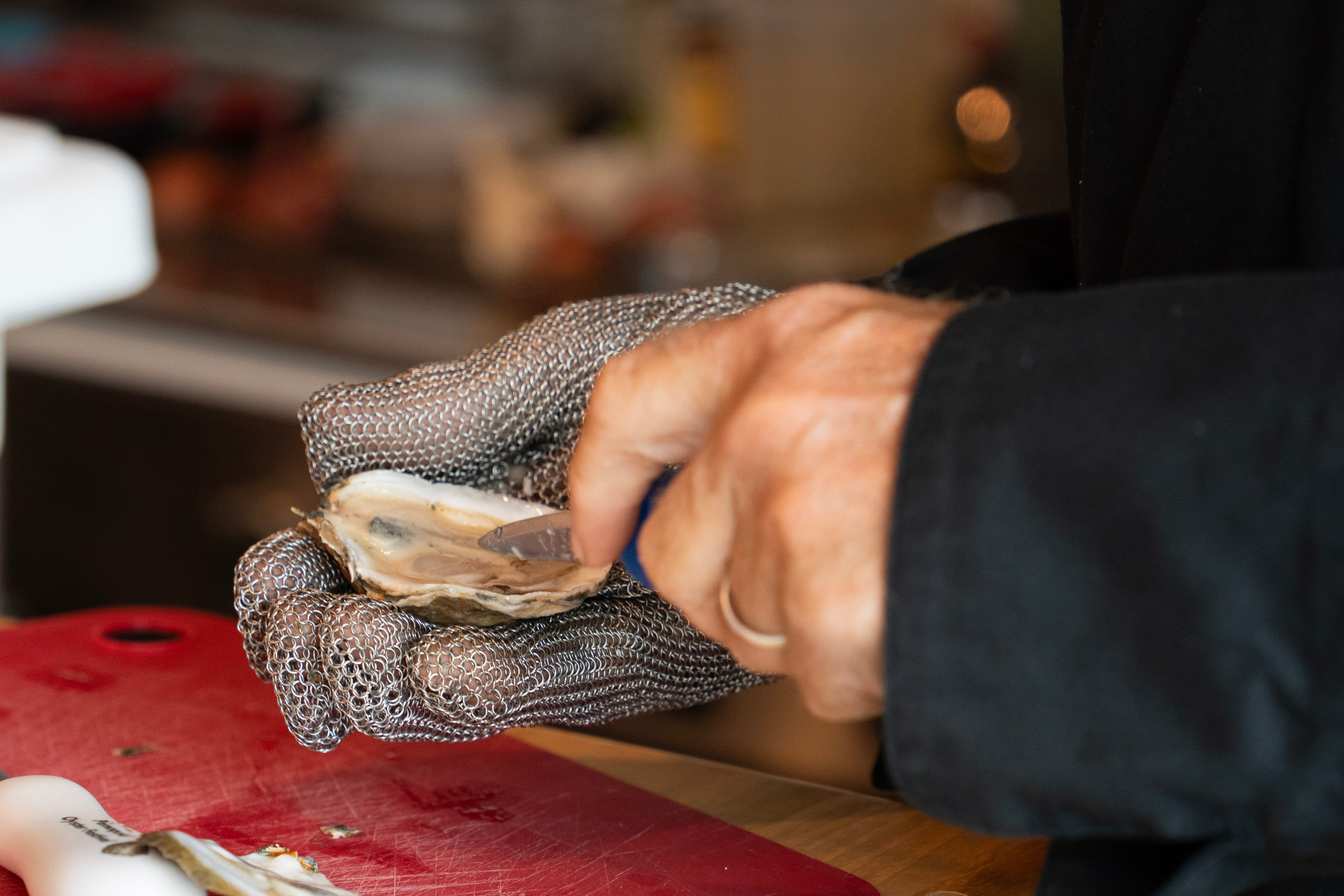
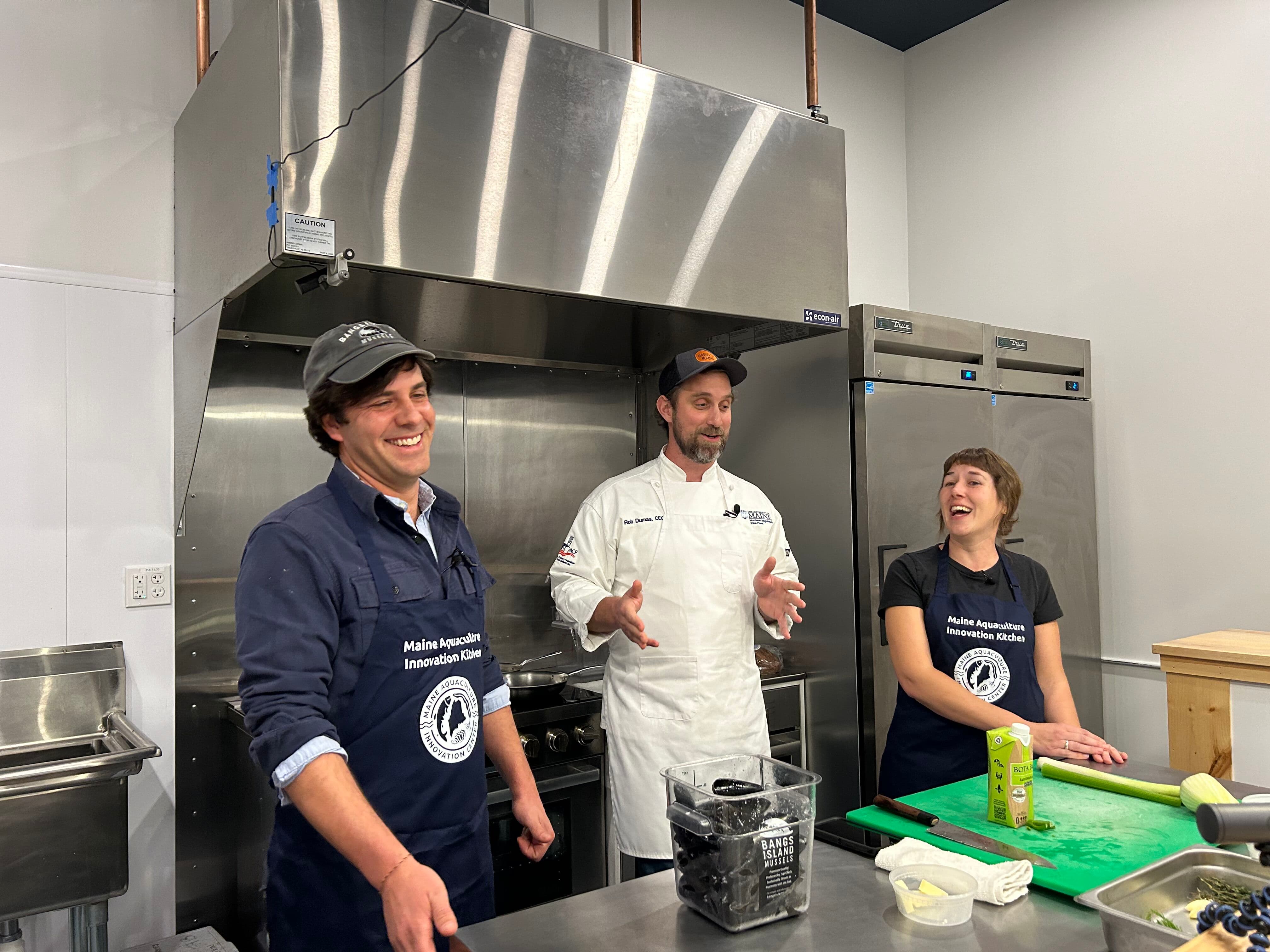
One episode spotlights a husband and wife duo, with Smokey McKeen, a local legend in the oyster world, and Kayli, a well-known chef, as they whip up a savory oyster flan and oyster ceviche. Smokey even teaches the host, Emily, how to shuck an oyster live on camera. In another episode, Ken Sparta, a kelp farmer and restaurant owner, explains how growing seaweed benefits the ocean—removing excess carbon and nitrogen—before Matt Haight, a local chef, transforms the kelp into a bold, briny pasta dish. Our mussel episode features Chef Rob Dumas, as he walks Emily and farmer Matt Moretti of Bangs Island Mussels through a simple and delicious Mussels Gratin recipe. Our most recent episode features Mhammed Sbaibi, who tells us all about raising Atlantic Salmon, while Chris Bell, a chef at Harbor Fish, makes outstanding salmon fritters, which are confirmed kid-approved. And of course, a highlight of each episode is MAIC’s own Chris Davis, our “roving field reporter” who takes viewers out on the water for a virtual farm tour.


For the Maine Aquaculture Innovation Center, Farmers MAI-Kit is about more than just visibility. It’s about giving consumers tools to cook confidently with local seafood and about supporting farmers by growing appreciation and demand for their products. Whether you’re a seafood lover, an aspiring home cook, or someone curious about where your food comes from, Farmers MAI-Kit is a fun, informative, and downright tasty way to learn about aquaculture.
Watch the series, or check out our YouTube channel.
With the eeBLUE Aquaculture Literacy Mini-Grant program, NAAEE is driving significant change for a second time! We are supporting partnerships with the common goal of aquaculture literacy set by the National Oceanic and Atmospheric Administration’s (NOAA) Office of Education, the National Marine Fisheries Service (NMFS), and the National Sea Grant Office. The nine mini-grants awarded will provide more than just financial support; they catalyze innovative educational experiences focused on aquaculture topics and promote public aquaculture literacy in eight states. These grants empower nonformal learning institutions (like aquariums), the aquaculture industry (such as shellfish, finfish, and seaweed farmers), and NOAA partners to make a tangible impact on our understanding of aquaculture. From "Agriculture in Aquaculture” to "Empowering Ocean Stewards," these grantees are helping to support a blue planet!
Join eePRO today and be a part of the conversation!
Comment and connect with fellow professionals in environmental education. Join eePRO >