AI, Education, and Ethics for a Changing World
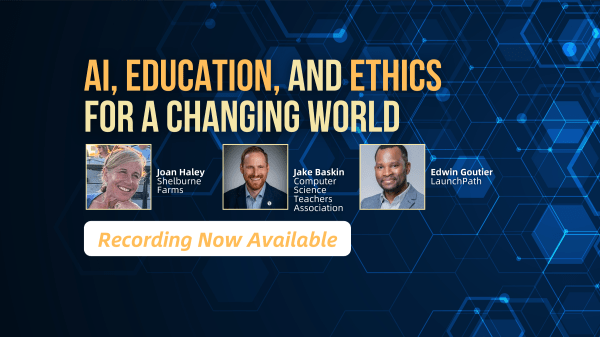








Recorded on August 20, 2025
Artificial intelligence or AI is rapidly reshaping the world—and education is no exception. View the engaging webinar exploring how AI is transforming education—inside and outside the classroom—and how it can be used to support effective learning. Our speakers offer their perspectives on the opportunities AI presents for our work, as well as how AI is raising important ethical questions for educators and students alike.
Our speakers highlight:
- AI-powered tools for environmental education, to protect our land, air, and water, and build healthier communities
- Empowering Students as AI Navigators to help create student ownership in how they understand and use AI in their lives—and the essential role educators play in guiding this journey
- AI’s Environmental Footprint and how organizations are working to reduce its impact
- Educator-specific resources and key features of leading AI tools
- A proposed ethical framework for when and how to integrate AI in meaningful, learner-centered ways
This webinar incorporates registrants' questions about AI and address some of the pressing concerns on your mind. This webinar is the first in a series of perspectives about AI and our work in environmental education and civic engagement.
Whether you're new to AI or already experimenting in your own work, this session offers practical guidance, critical insights, and a reminder of the central role educators play in fostering thoughtful, human-centered learning in an AI-driven world.
Additional links shared in the presentation slides:
Great discussion starters!
AI trends, including some trends in education
Environmental Impacts
Speakers
Joan Haley

Joan brings deep expertise in curriculum design, educator professional development, and climate partnerships, and has led innovative international and national programs for the National Park Service, Shelburne Farms, the North American Association for Environmental Education, the Smithsonian Institution, the Environmental Protection Agency, and the U.S. Peace Corps. She holds a doctorate in education, a master’s in environmental science, and a master’s in public administration.
Jake Baskin

Jake is the executive director of the Computer Science Teachers Association, the world’s leading association for K–12 computer science teachers. In this role, he led a complete turnaround of CSTA from the brink of insolvency to a thriving professional development and community-building association of over 20,000 members and 100 chapters worldwide. During his tenure, CSTA’s conference attendance has quadrupled. The organization has launched professional learning programs reaching over 5,000 participants annually, secured over $20 million in new funding commitments, and grown from a staff of two to a team of twenty.
He is a former high school computer science teacher, department chair, and professional development provider with Chicago Public Schools. As a teacher, he focused on increasing access to computing for underrepresented groups, and he more than doubled female enrollment in introductory computer science classes.
Prior to joining CSTA, he was director of state government affairs for Code.org, where he worked with educators and policymakers to advocate for policies that expand access to high-quality computer science education with state departments of education and governors’ offices across the country.
Edwin Goutier

Edwin Goutier is a social innovation leader and business strategy enthusiast. He led innovation for America's largest nonprofit where his work was honored in Fast Company's Most Innovative Companies list and shared on the stage at SXSW. As CEO of LaunchPath, he explores his passions at the intersections of innovation, technology, and equitable access to opportunity.