Building Curiosity Together!





This blog post was written by Kaira Gómez-García, M.Ed., Club House director at Together!; Anthony Terzoli, education coordinator at Puget Sound Estuarium; Hap Clemons executive director at Puget Sound Estuarium.
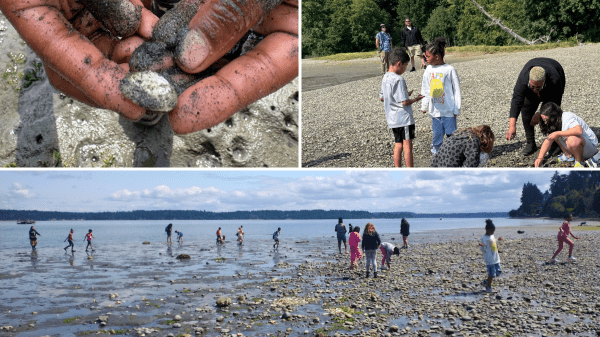
For the past five years, Together! and the Puget Sound Estuarium have partnered to help students across Thurston County, Washington, discover the science, wonder, and responsibility that come with living near Puget Sound. Through classroom sessions, after-school activities, and summer field experiences, the partnership has introduced elementary and middle school students to hands-on, place-based environmental learning.
Expanding Access Through Partnership
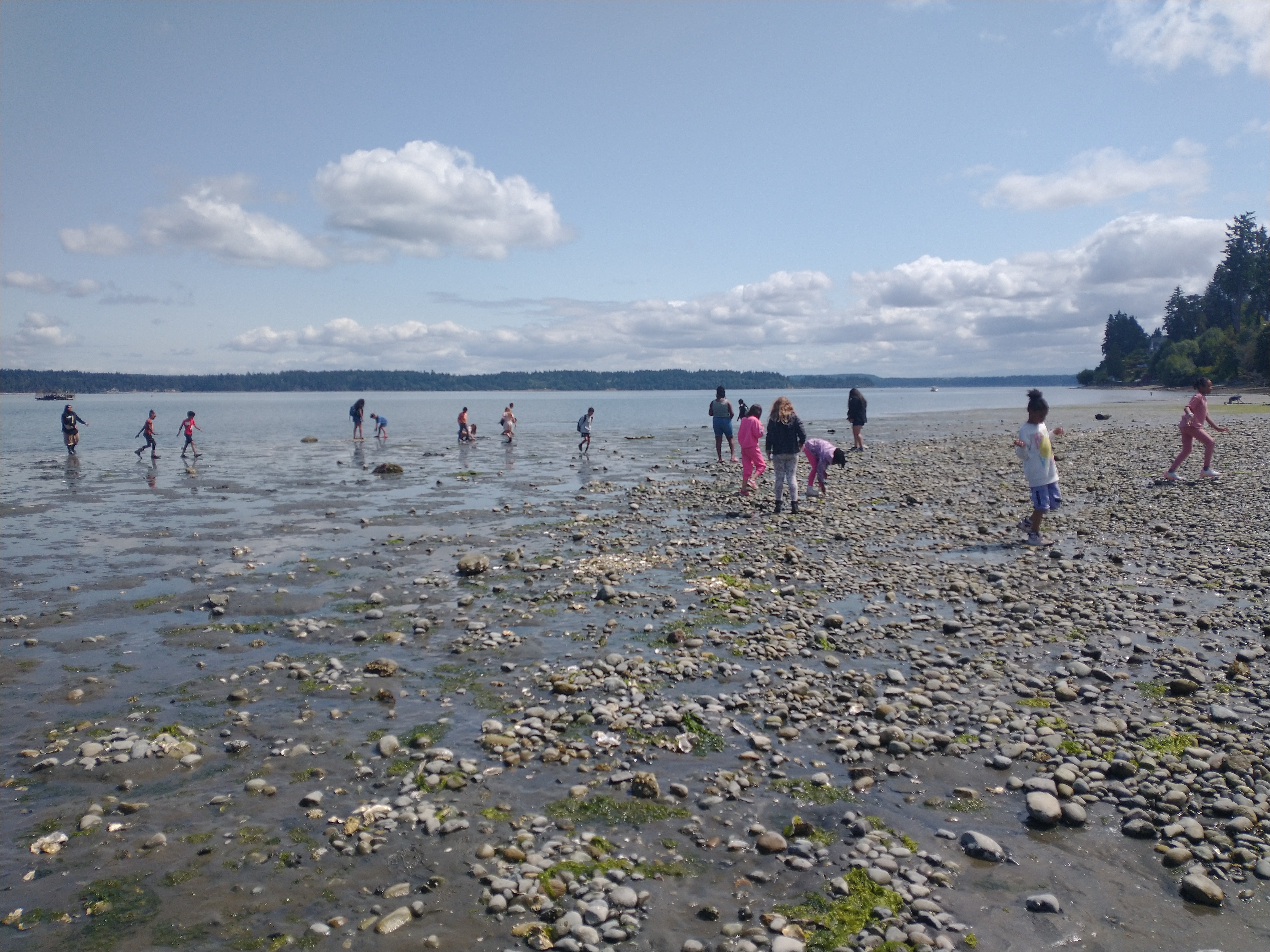
Each school year and summer, Estuarium educators visit Together!’s Club House sites to lead programs focused on marine ecosystems, estuaries, and environmental issues. Students participate in STEM-based activities that promote teamwork, problem-solving, and curiosity about their local environment. During the summer, the partnership extends into a full week of field experiences, where students visit state parks, explore beaches, and engage in service-learning projects that connect them to their communities.
“Our youth are introduced to topics and activities they would otherwise not experience,” says Kaira Gómez-García, Club House director at Together!. “These programs build teamwork, empathy, and confidence while connecting students and their families to the environment right outside their door.”
This partnership has evolved over the years to serve multiple school sites, including both elementary and middle schools. While one site recently lost its Title I status due to reclassification, a new site—Mountain View Elementary—has joined the program, continuing the mission of equitable access to science and outdoor learning.
Adapting Through Connection: Lessons from the Field
Anthony Terzoli, education coordinator at the Estuarium, has led much of the on-the-ground collaboration and brings perspective from five years of partnership with Together!.
“Over time, we’ve learned a lot about the students and their communities,” Anthony says. “This year, we introduced Family Nights to connect what students learn in Club House with their families and neighborhoods. Students are more likely to take what they learn home when it’s tied to improving habitats and green spaces they know.”
Anthony and the Estuarium Education Team also expanded their Meaningful Watershed Educational Experience (MWEE) approach by incorporating social-emotional learning through nature journaling.
“At one of our middle school sites, the journals became more than science notebooks,” he explains. “Students began reflecting on how being outdoors made them feel, what inspired them, and how they wanted to build their future working in nature. Those connections between science and self-awareness are powerful.”
In middle school programs, lessons align closely with science classes, allowing students to explore shared concepts across both settings. In elementary programs, art and storytelling reinforce social-emotional learning, helping students form relationships with each other, their community, and the natural world.
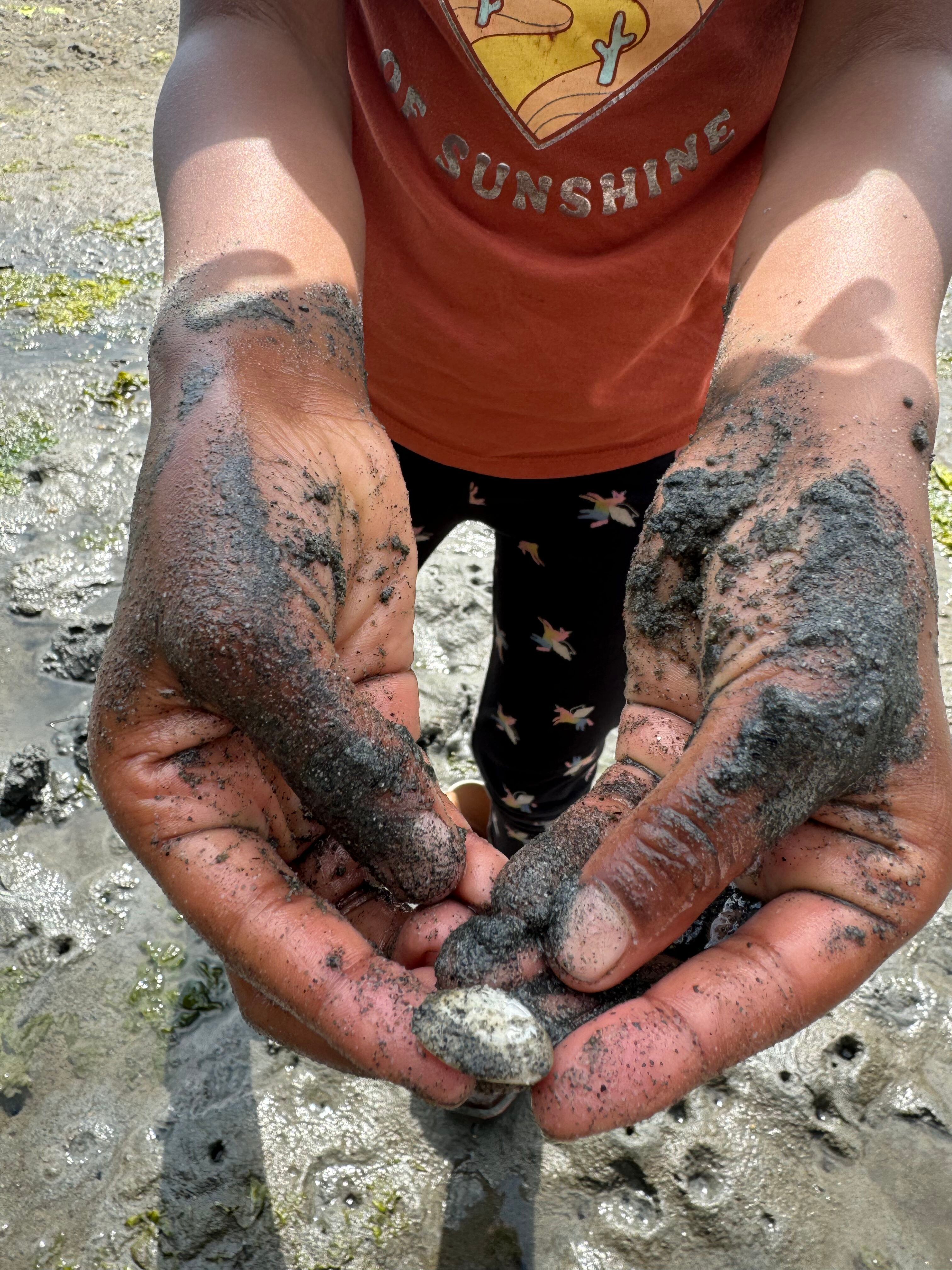
“It’s rewarding to see elementary students recall lessons from Club House and apply them on field trips,” Anthony adds. “They recognize species, remember safety and stewardship lessons, and show genuine excitement when they make connections to something they learned earlier.”
“The Estuarium’s partnership with Together! is powerful. The reason students remember and make these connections is because experiential learning imprints a memory that can last a lifetime. That is the reason we continue to do this work. It makes a difference,” says Hap Clemons, executive director of Puget Sound Estuarium.
Partnership in Practice
The collaboration is built on co-creation and communication. Each term, Together! site coordinators and Estuarium educators review goals and select activity outlines tailored to their students.
“We design the framework, and site coordinators help refine it,” Anthony says. “We also provide annual training to refresh staff on our estuary education curriculum and keep everyone aligned.”
The most persistent challenge, he notes, is connecting more directly with classroom teachers.
“We don’t always get to see how our after-school work links to what students learn during the day,” Anthony says. “If we could bridge that gap, the impact would be even greater—students would see a full picture from classroom to Club House to the shoreline.”
The partners plan to continue integrating family engagement and community science in the coming year, creating new opportunities for students to collect data, participate in restoration activities, and share their findings with their communities.
Together, they’re building more than environmental knowledge; they’re building confidence, curiosity, and care for the waters that define the region.
Looking Ahead
Together! and the Estuarium will keep strengthening the links between classroom, Club House, and shoreline. As students return year after year, they build relationships with staff, places, and each other that make marine science feel familiar and personal. Over time, those relationships grow into a lasting sense of belonging and responsibility for our waterways.
NAAEE, in collaboration with NOAA and supported by the U.S. Department of Education, is working with twelve environmental education organizations to offer engaging after-school watershed-focused STEM (science, technology, engineering, and mathematics) programs. The eeBLUE 21st Century Community Learning Centers Watershed STEM Education Partnership Grants, administered by NAAEE and running from 2024–2025, support environmental education organizations collaborating directly with 21st CCLC sites. These sites play a crucial role in designing and implementing locally relevant, out-of-school-time programs that develop students' environmental literacy and leadership skills as they improve their communities. These grants support programming for local Nita M. Lowey 21st Century Community Learning Centers (21st CCLC) sites and their students, many of whom live in underserved areas. The 12 selected projects serve 11 states, ranging from Hawai’i to Maine.
Join eePRO today and be a part of the conversation!
Comment and connect with fellow professionals in environmental education. Join eePRO >