“Everybody Listen Up:” From Discovery to Action on Scajaquada Creek



This blog post was written by Mary Ronan, environmental educator at New York State Department of Conservation.
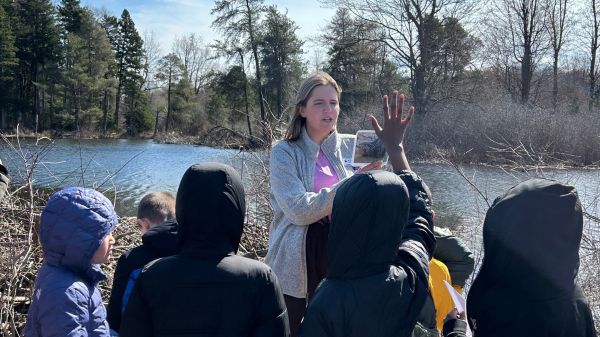
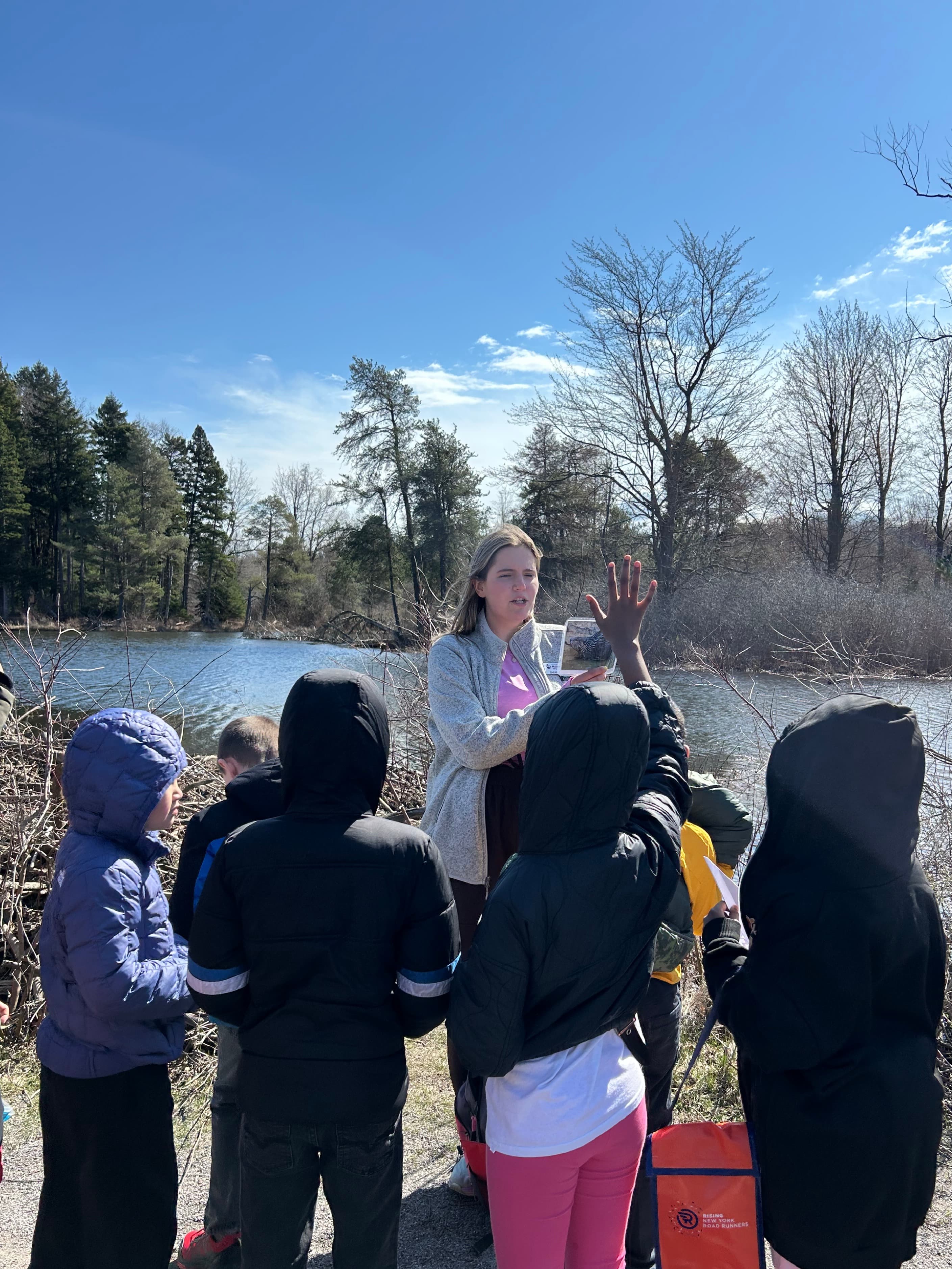
“What creek?” was the students’ response when asked to name the creek that flowed alongside their school grounds. Less than 500 meters away, the Scajaquada Creek borders the school before disappearing under the parking garage of the nearby mall. The 4th-grade students at Union East Elementary in Cheektowaga were not alone in their ignorance; with more than 3.7 miles of the waterway buried underground, many residents are unaware of how close they live to a major tributary of the Great Lakes watershed. Friends of Reinstein Woods educators hoped to change that with weekly experiences through the “STEM in the Schoolyard: Watershed Engineers” program.
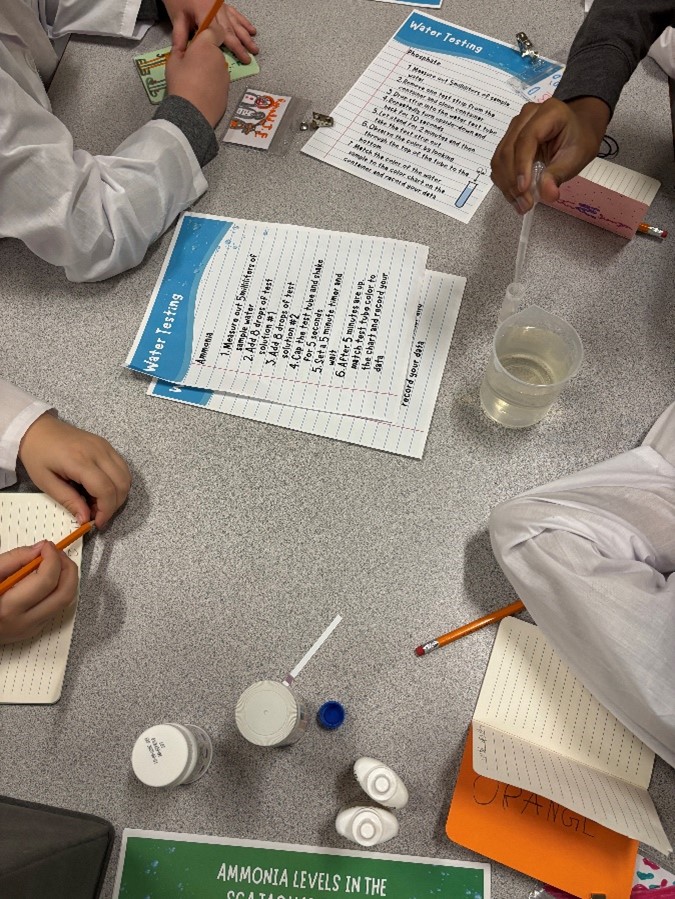
The Scajaquada Creek flows through the suburbs of Cheektowaga, New York, home to Union East Elementary and Maryvale Intermediate 21st Century Community Learning Center (21st CCLC) site, before it travels underground through the City of Buffalo, New York. Students followed the creek’s path as it emerges from underground just before it flows into the Niagara River, crashes over Niagara Falls, and heads into Lake Ontario before reaching the Atlantic Ocean via the St. Lawrence River. Each week, students put on lab coats and tested the creek’s water quality while learning about the historical and current land use practices that impact its status as a highly impaired water body.
Before its channelization and burial, the Scajaquada Creek was bordered by productive wetlands that naturally filtered water and prevented flooding. Students eagerly learned about wetland animals and created wetland ecosystem dioramas featuring beavers, great blue herons, and snapping turtles. Their work was displayed at the nearby Reinstein Woods Environmental Education Center to showcase the many wetlands on the property. When asked to imagine the creek in 50 years, students hoped to see this natural landscape restored, with “trees and grass” surrounding an “uncovered creek.” Their drawings depicted people playing in and around the waterway, which is currently too polluted to touch safely. Students met with a local expert from Buffalo Niagara Waterkeeper, who is working to create that reality with planned restoration projects within the students’ community.
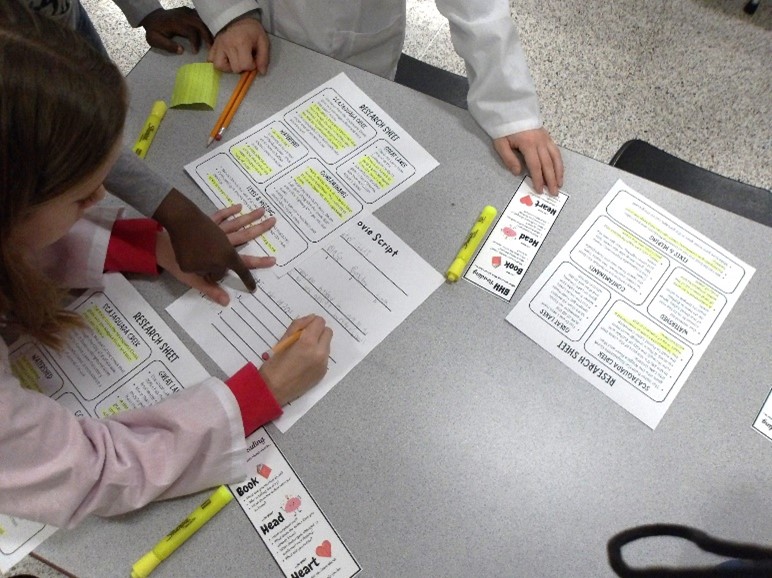
By the tenth week of the program, students were well-versed in the human impacts on their local creek and ready to learn how to share their new knowledge and understanding of the watershed. Students worked in small groups to plan and record short educational films highlighting stormwater overflow and litter pollution. After participating in a schoolyard cleanup, students collaborated on letters to community leaders. “Everyone reading this letter—listen up,” one group wrote, “The Scajaquada Creek is in danger and I’m going to teach you some facts about how to save it!”
Students were no longer unaware of their neighborhood creek that flowed just a few hundred meters away, and they wanted everyone in the watershed to understand the consequences of their actions. “Imagine the Scajaquada Creek was in your backyard,” students wrote. “What would you do with it? Would you let people throw garbage in it? No! So let’s keep it clean forever.”
NAAEE, in collaboration with NOAA and supported by the U.S. Department of Education, is working with twelve environmental education organizations to offer engaging after-school watershed-focused STEM (science, technology, engineering, and mathematics) programs. The eeBLUE 21st Century Community Learning Centers Watershed STEM Education Partnership Grants, administered by NAAEE and running from 2024–2025, support environmental education organizations collaborating directly with 21st CCLC sites. These sites play a crucial role in designing and implementing locally relevant, out-of-school-time programs that develop students' environmental literacy and leadership skills as they improve their communities. These grants support programming for local Nita M. Lowey 21st Century Community Learning Centers (21st CCLC) sites and their students, many of whom live in underserved areas. The 12 selected projects serve 11 states, ranging from Hawai’i to Maine.
Join eePRO today and be a part of the conversation!
Comment and connect with fellow professionals in environmental education. Join eePRO >