Explorers, Restorers, Creators, and Mother Nature





This blog post was written by Amy Neblett, operations director at Artist Boat.
Have you ever written an amazing grant application only to have Mother Nature derail your plans? Just us?
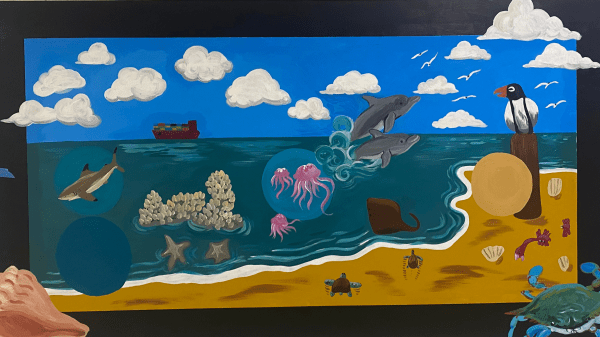
“Explorers, Restorers, and Creators” was written in partnership with a local small school principal and staff. This school has been a consistent partner with Artist Boat programming and has a 22-acre habitat preserve surrounding their campus. Students were supposed to learn about the flora and fauna of Texas coastal margin ecosystems and explore the 22 acres of native habitat surrounding the school, restore portions of that habitat to learn about habitat stewardship and bond with the land, and create acrylic murals to hang in the school that explain what they learned.
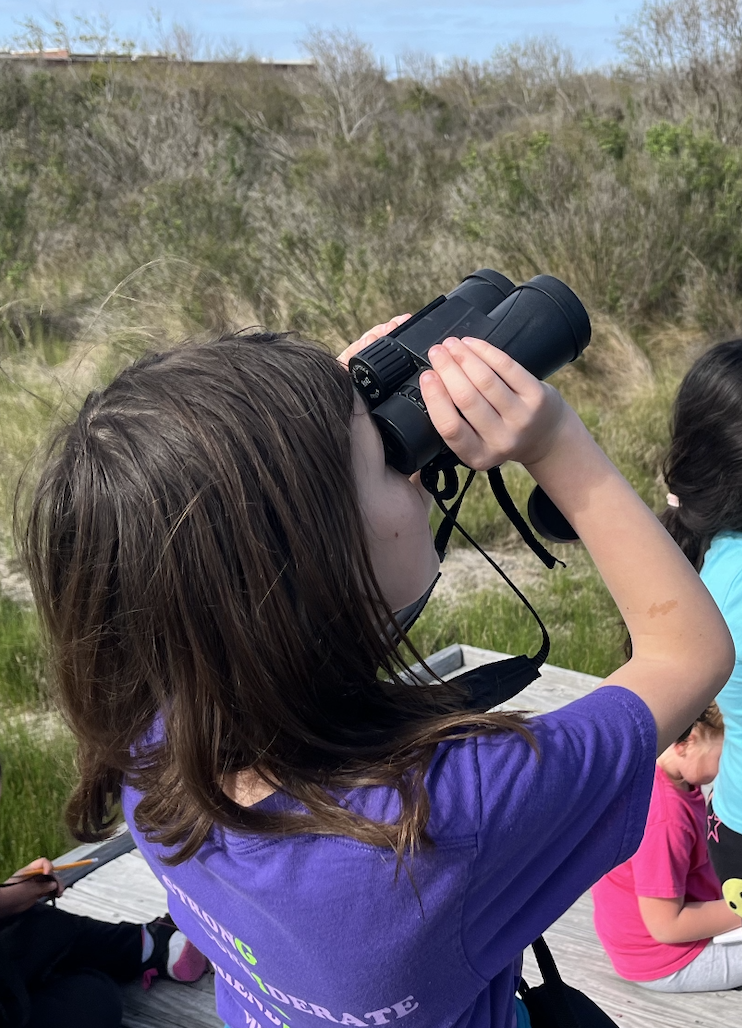 Students learned to use binoculars and identify local birds. Photo credit: Principal Traci Camp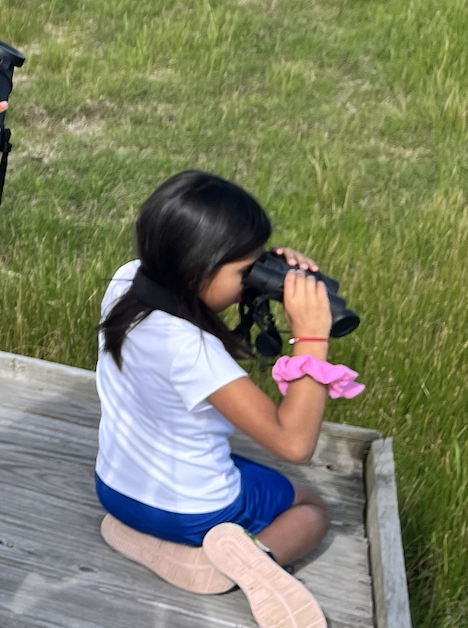
However, a hurricane hit our community during the summer and damaged the school’s boardwalks, which carry students over the marshes and into their coastal habitat preserve. This damage meant that students were unable to go explore or do any of their school-day learning outside until the boardwalks were repaired. As Gulf Coast dwellers and an organization that works with many school districts, we knew we had to be resilient and find a way to do what was needed for our students. Artist Boat staff arrived with chainsaws, tools, and materials. They cut and removed the trees that had fallen over the boardwalk. Staff cut back overgrowth and dangerous tree limbs. They replaced boards and resecured others, making it safe for students to once again explore their school habitat preserve. This required more of our staff time (and personnel budget) than we had planned for, but it was what was needed for the program to move forward with immersive, place-based outdoor education.
That winter, our coastal community experienced a freeze that killed off most of the pollinator garden in the school’s native habitat. While unfortunate, it also gave our participants the chance to learn about which plants are important for the birds and butterflies in their flyway and the water needs of these plants. They learned the definition of a weed is not what they thought (a plant we don’t want) and instead created their own definition (a plant we don’t want HERE). They learned about the hundred’s of birds that fly through their habitat preserve each year and why their land is so important for the bird migration. In the spring, participants restored and expanded the pollinator garden through seeding and live root planting. They continued to water and check on the gardens throughout the spring semester.
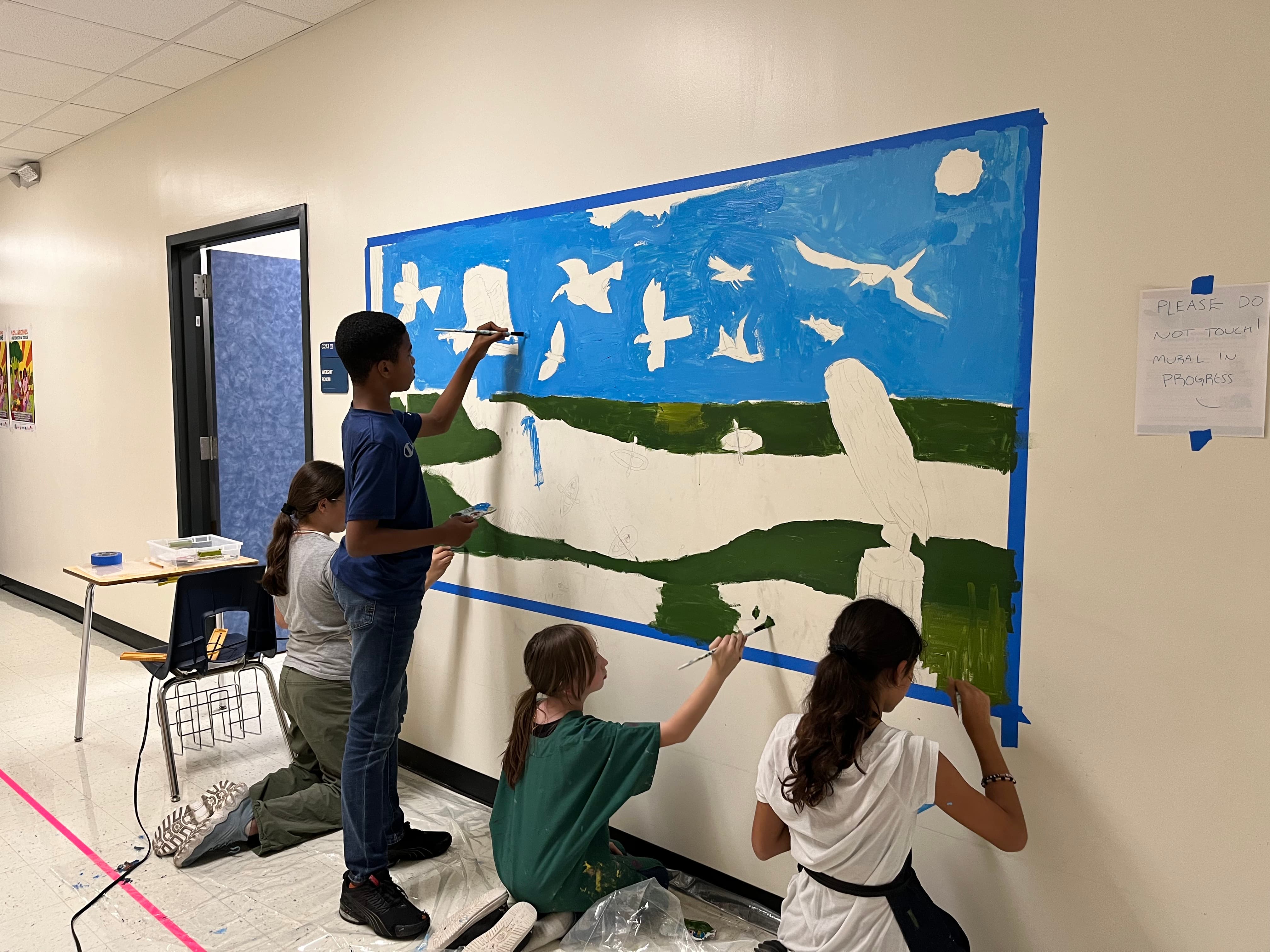
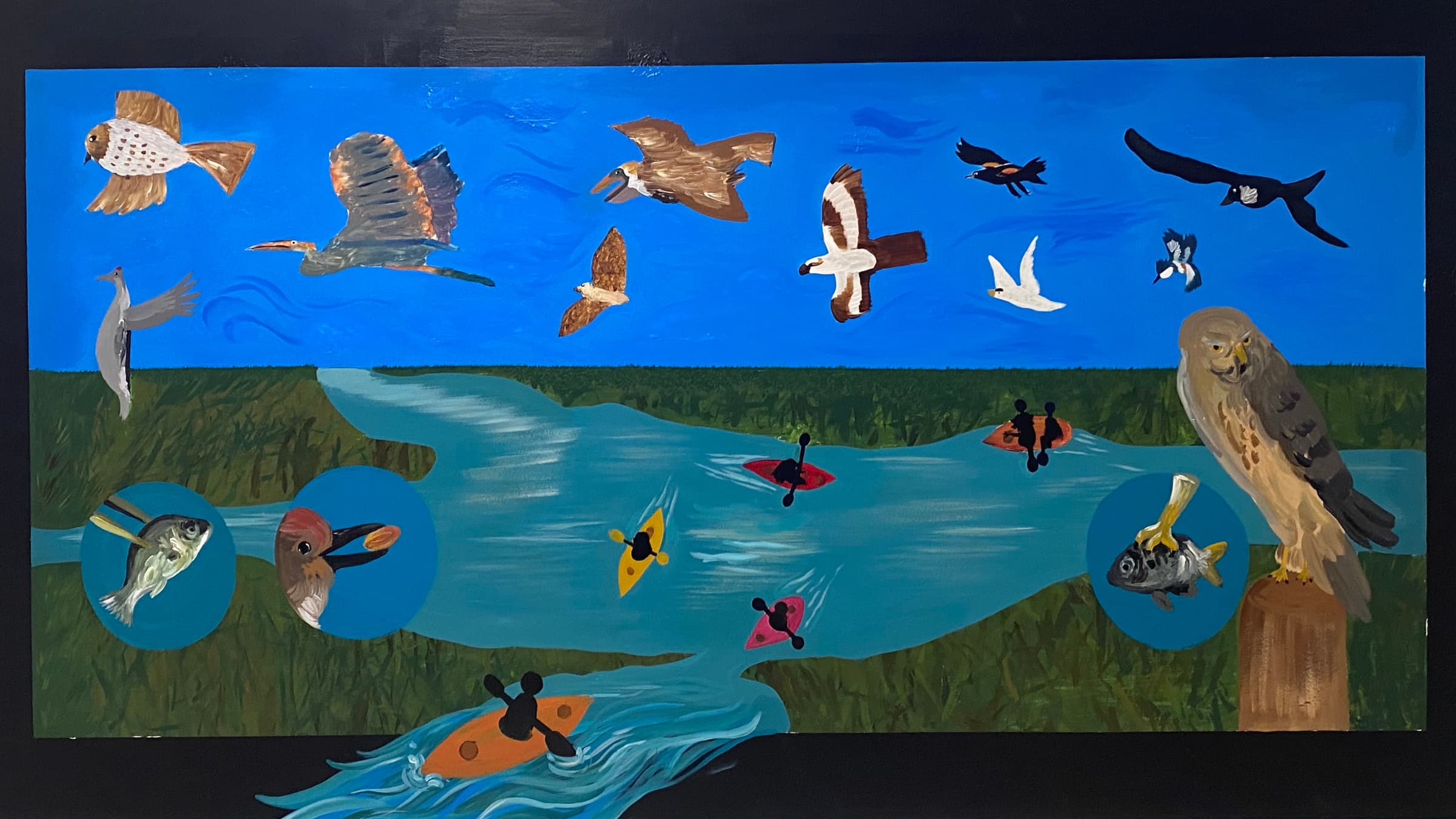
Because of these nature-based “setbacks,” the participants had a deeper connection to the habitat that they see and spend time in every day. Synthesis discussions and nature journal entries were more personal and less abstract. The acrylic murals that were created were more specific to their backyard and will serve as a lasting learning tool for classes to come.
Perhaps our grant plans were not derailed after all.
NAAEE, in collaboration with NOAA and supported by the U.S. Department of Education, is working with twelve environmental education organizations to offer engaging after-school watershed-focused STEM (science, technology, engineering, and mathematics) programs. The eeBLUE 21st Century Community Learning Centers Watershed STEM Education Partnership Grants, administered by NAAEE and running from 2024–2025, support environmental education organizations collaborating directly with 21st CCLC sites. These sites play a crucial role in designing and implementing locally relevant, out-of-school-time programs that develop students' environmental literacy and leadership skills as they improve their communities. These grants support programming for local Nita M. Lowey 21st Century Community Learning Centers (21st CCLC) sites and their students, many of whom live in underserved areas. The 12 selected projects serve 11 states, ranging from Hawai’i to Maine.
Join eePRO today and be a part of the conversation!
Comment and connect with fellow professionals in environmental education. Join eePRO >