A Summer of Firsts!




This blog post was written by Morgan Buchanan, senior education programs coordinator at ShoreRivers.
“We can do anything for 19 days!”
This became the guiding principle for Caroline County Recreation and Parks (CCRP) and ShoreRivers as we embarked on an ambitious summer camp adventure this July. With the support of the eeBLUE 21st CCLC Watershed STEM Education Partnership Grant Program, a brand-new partnership was formed between ShoreRivers—an environmental nonprofit dedicated to protecting Maryland’s Eastern Shore waterways—and CCRP, which runs summer programs at Caroline County’s five elementary schools through 21st Century Community Learning Centers (CCLC) funding. We worked together to design and implement 19 bustling days of summer camp programming for 60 fifth-graders from Denton, Federalsburg, and Greensboro elementary schools, where students explored the driving question: Are our rivers swimmable and fishable?
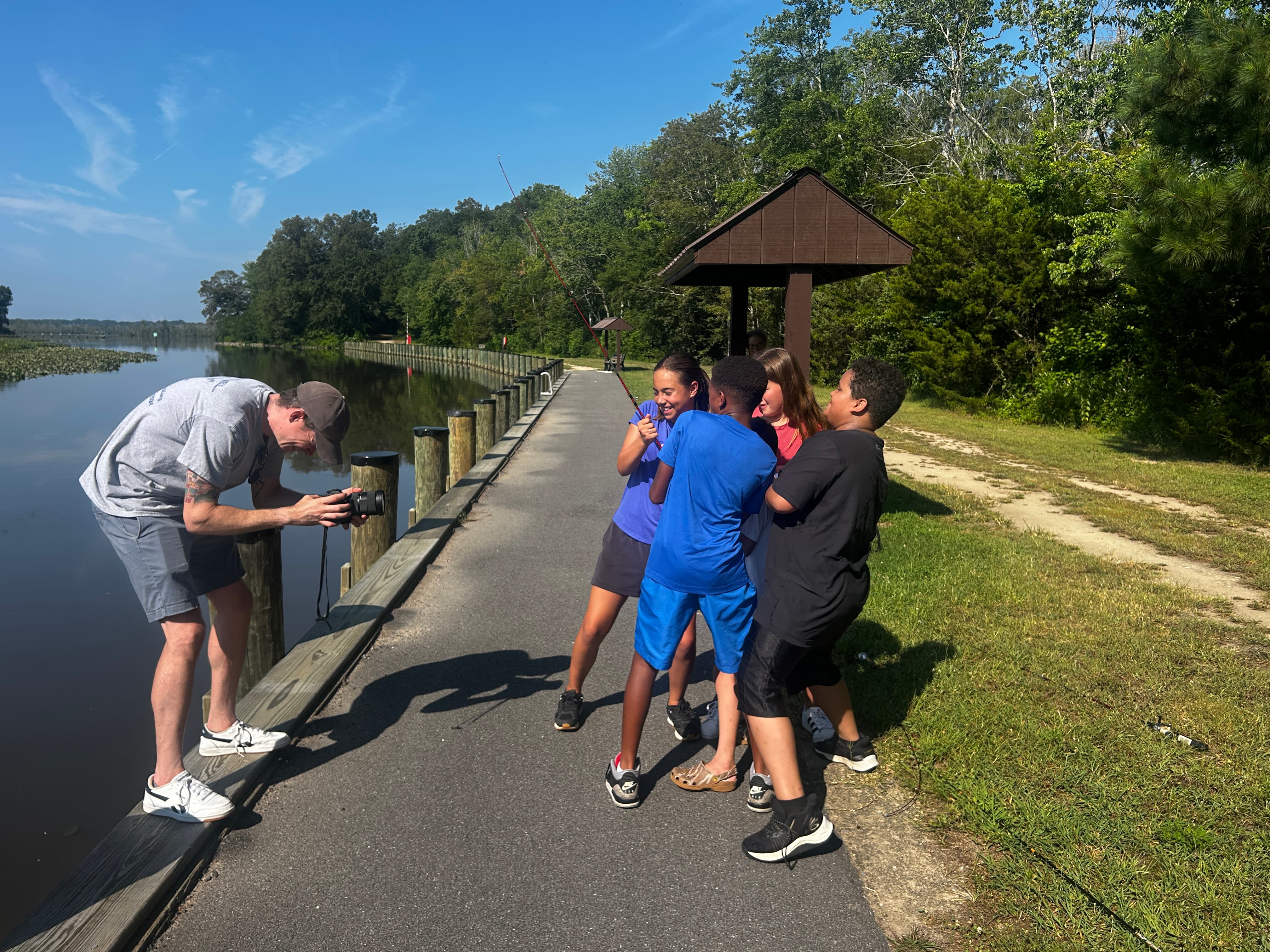
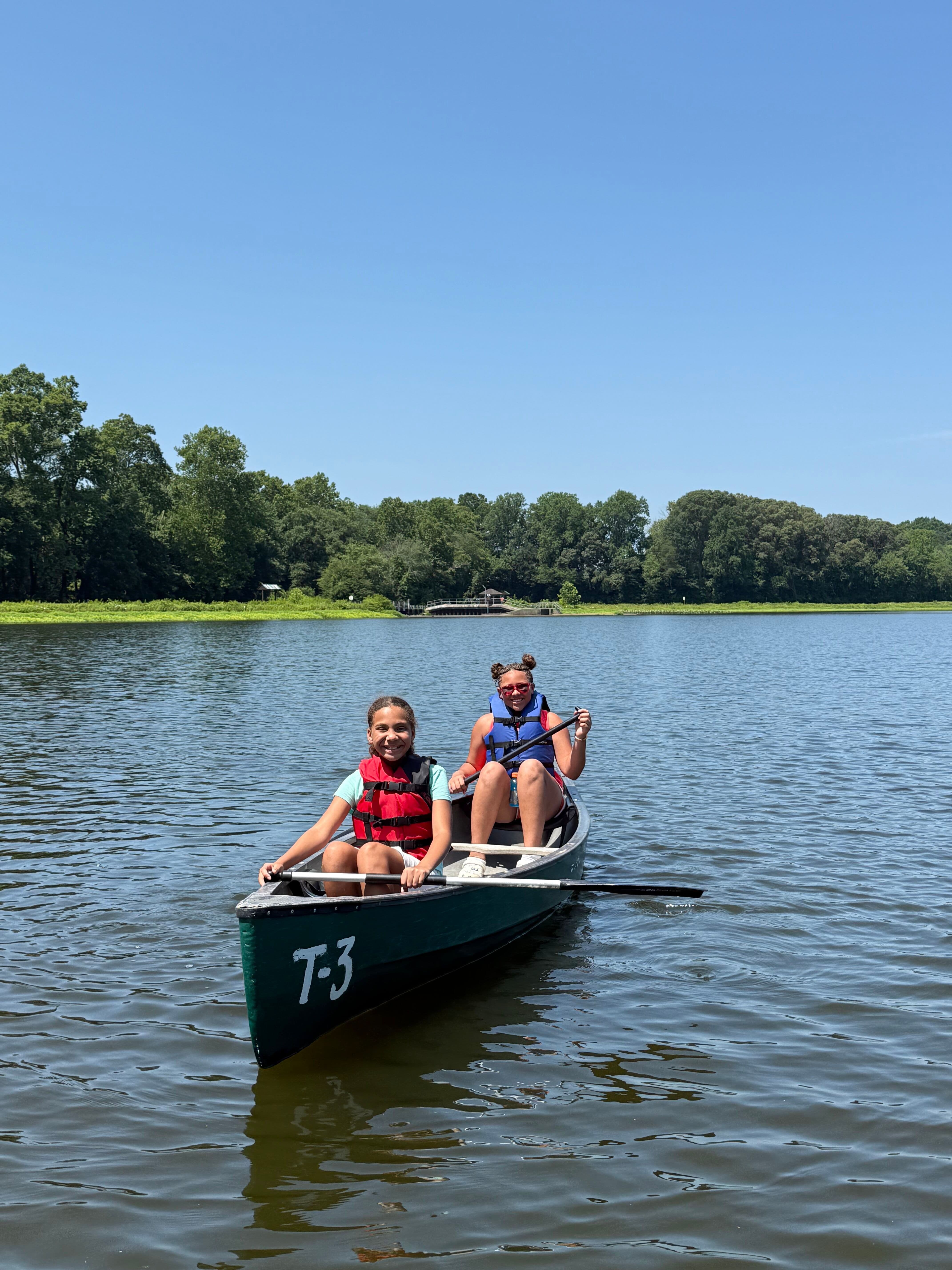
For many campers, this summer was packed with first-time experiences in their classrooms and communities. They fished for invasive blue catfish in the Choptank and Nanticoke rivers, canoed down scenic Tuckahoe Creek while surrounded by bright pink swamp rose mallow, and learned how to test water quality using real scientific tools. Armed with data on water quality, species abundance, and bacteria, they made powerful connections between their health, communities, and the health of local waterways.
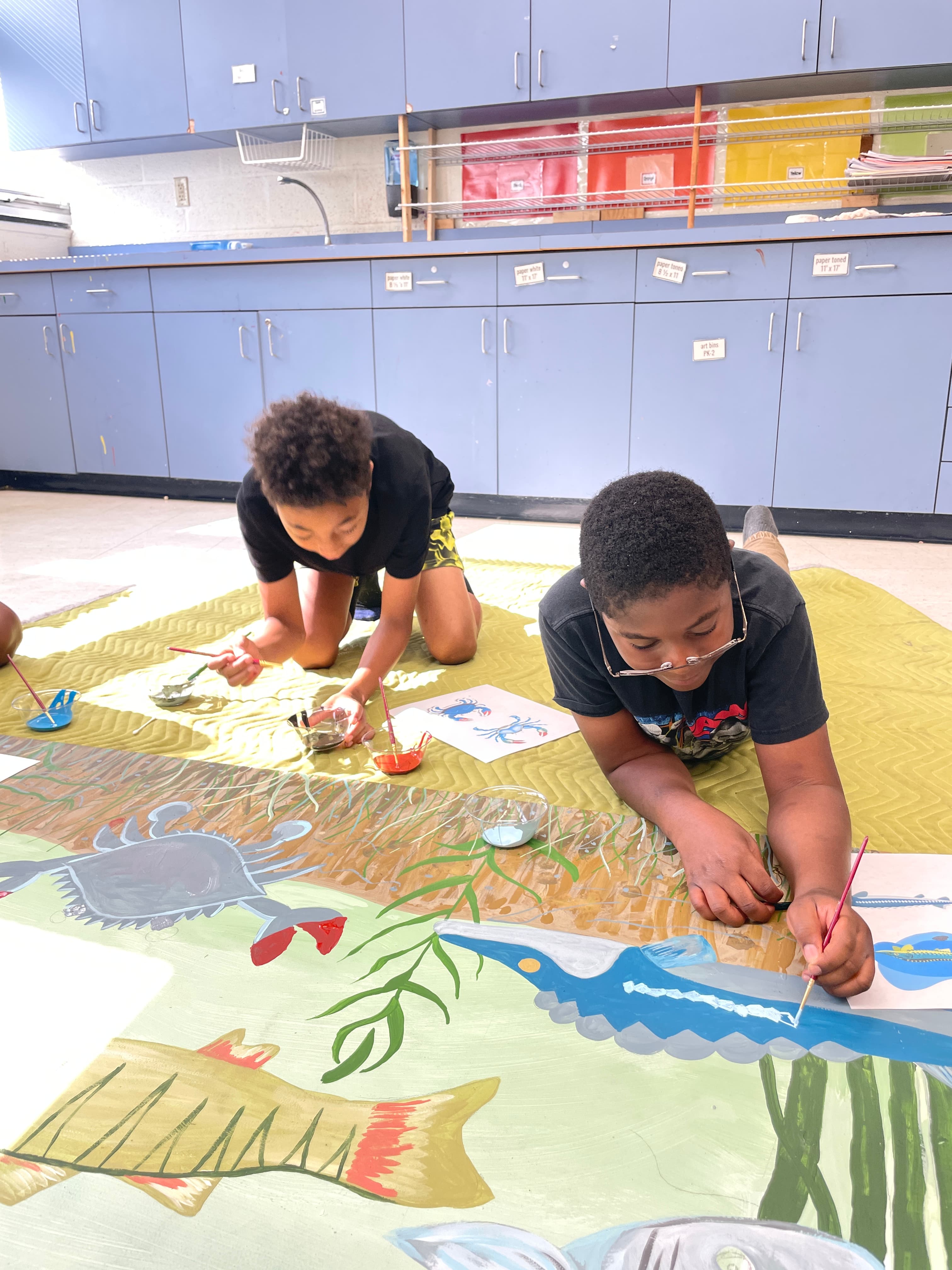
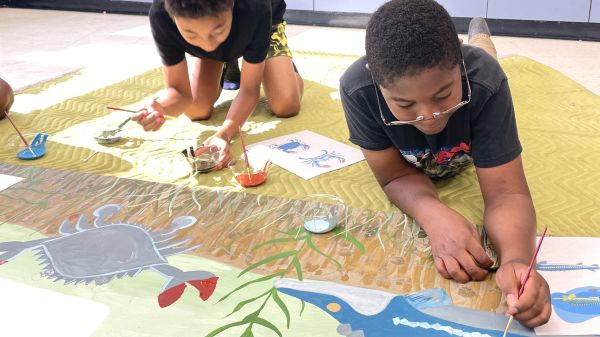
As our 19 days went on, campers turned these discoveries into creative action projects aimed at sharing their newfound knowledge with their own communities. Federalsburg and Greensboro students teamed up with artists from the Kent Island Creator’s Klub to design and paint vibrant murals. These artworks, celebrating their favorite river species and ways to connect with the water, will decorate public spaces across the county. Campers at Denton Elementary took another route, working with local filmmaker Rob Simmons of Shore Films to create a music video encouraging folks to catch and eat invasive blue catfish—complete with a student-choreographed blue catfish dance! You can check out their masterpiece at ShoreRivers YouTube.
Along the way, students also got a first-hand look at some STEM and green career options. Thanks to support from our partners at Maryland State Parks, Coastal Conservation Association, Chesapeake Culinary Center, and the National Oceanic and Atmospheric Administration, students engaged with park rangers, fishermen, water quality scientists, environmental educators, artists, filmmakers, and even chefs during an invasive blue catfish taco cooking class!
This summer adventure didn’t just invite students to step into new territory. For ShoreRivers, this was our first time working with a 21st CCLC program, our first long-term partnership in Caroline County Public Schools, and even our first summer camp experience. For CCRP, it was a return to supporting hands-on outdoor adventures like fishing and paddling, and their first time making environmental education a daily feature of its programming.
With a team of just four full-time educators at ShoreRivers, pulling off 19 days of outdoor learning, watershed exploration, art, fishing and paddling, cooking, and music video filming was definitely a challenge. Three strategies for co-facilitation with CCRP made all the difference:
- Paddle safety training: ShoreRivers’ staff are certified paddle safety and training instructors and led a training for CCRP staff, practicing canoe rescues and building confidence on the water before leading students. This also provided us with a meaningful opportunity for ShoreRivers and CCRP staff to build relationships with each other before our first time with students.
- Shadowing existing programs: ShoreRivers educators observed CCRP’s summer and after-school sessions, helping us shape programming to authentically blend with and enhance our newly shared summer camp culture.
- Shared accountability: CCRP administrators tied support for ShoreRivers’ programming into staff evaluations, ensuring buy-in at every level.
As anyone who’s ever been to summer camp can tell you, the energy, discoveries, and connections you build don’t end with the last day of camp. They continue on and ripple outward—into campers’ families, schools, and communities. And they’ll continue on in our staff, too. ShoreRivers is already looking forward to next summer, when we’ll build on our new partnerships and experiences and welcome a whole new wave of campers ready to ask big questions and take bold actions to protect their rivers.
NAAEE, in collaboration with NOAA and supported by the U.S. Department of Education, is working with twelve environmental education organizations to offer engaging after-school watershed-focused STEM (science, technology, engineering, and mathematics) programs. The eeBLUE 21st Century Community Learning Centers Watershed STEM Education Partnership Grants, administered by NAAEE and running from 2024–2025, support environmental education organizations collaborating directly with 21st CCLC sites. These sites play a crucial role in designing and implementing locally relevant, out-of-school-time programs that develop students' environmental literacy and leadership skills as they improve their communities. These grants support programming for local Nita M. Lowey 21st Century Community Learning Centers (21st CCLC) sites and their students, many of whom live in underserved areas. The 12 selected projects serve 11 states, ranging from Hawai’i to Maine.
Join eePRO today and be a part of the conversation!
Comment and connect with fellow professionals in environmental education. Join eePRO >