There’s a Lot Happening Outdoors . . .




This blog post was written by Theresa Lark, executive director at MidMichigan Environmental Action Council.
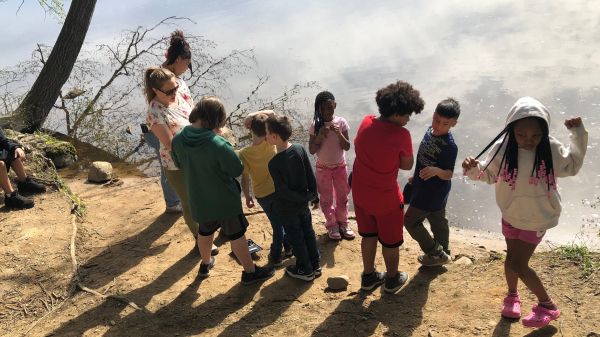
We are through the first year of activities with students and facilitators at Reaching Higher, our 21st Century Community Learning Center partners. We’ve used watershed models and water chemistry testing tools to prepare students for what is, unsurprisingly, the best part of our program: observations in nature. It turns out, there’s a lot happening outdoors.
Backyard Water Chemistry
Educators from the State of Michigan Department of Environment, Great Lakes, and Energy (EGLE) brought water chemistry testing and training to rivers in our students’ backyards. Young people in grades 3–8 learned how to measure dissolved oxygen, pH, nitrogen / nitrates / nitrites, and turbidity.
Nature Journaling—A Multidisciplinary Approach to Watershed Education
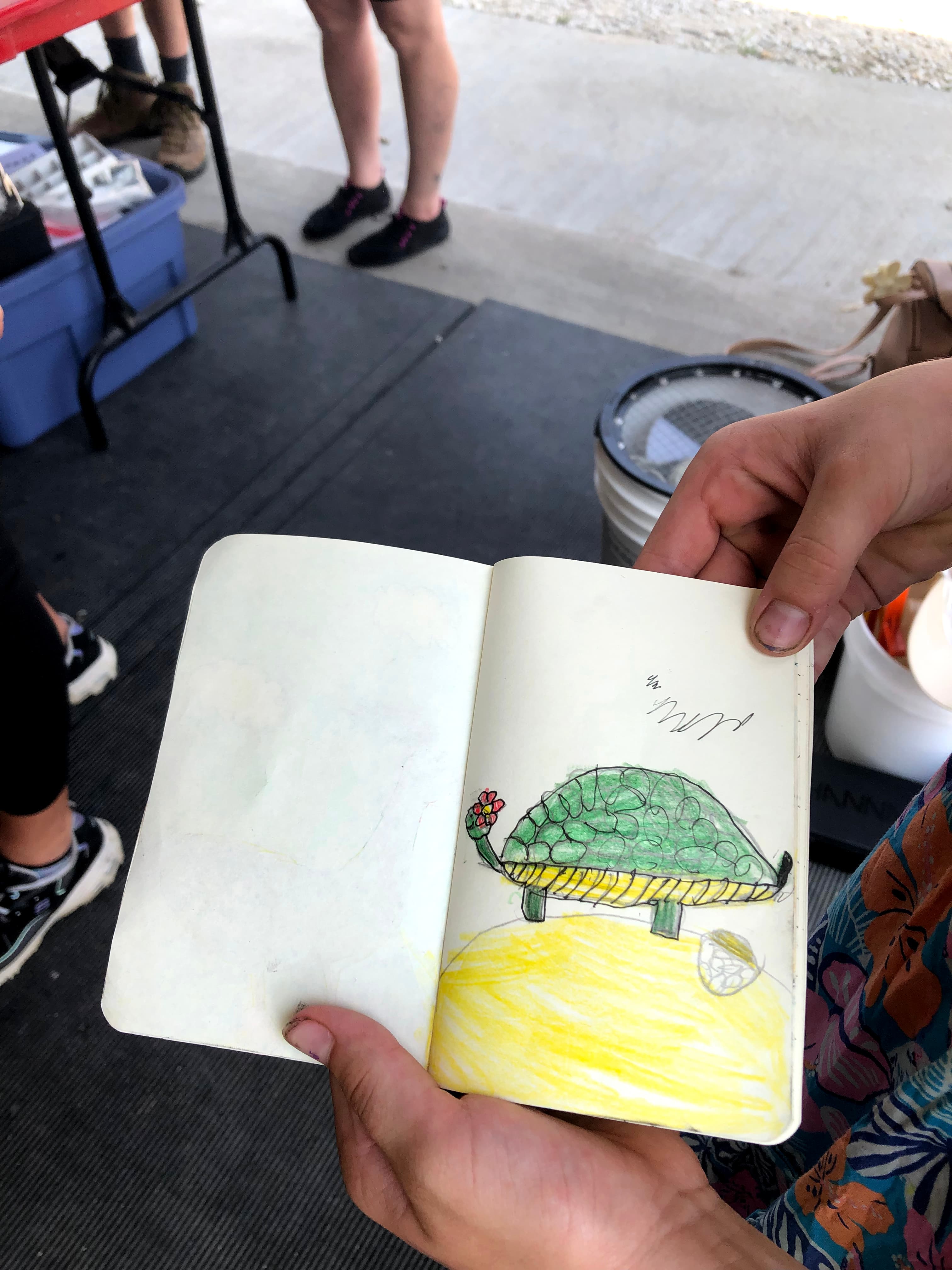
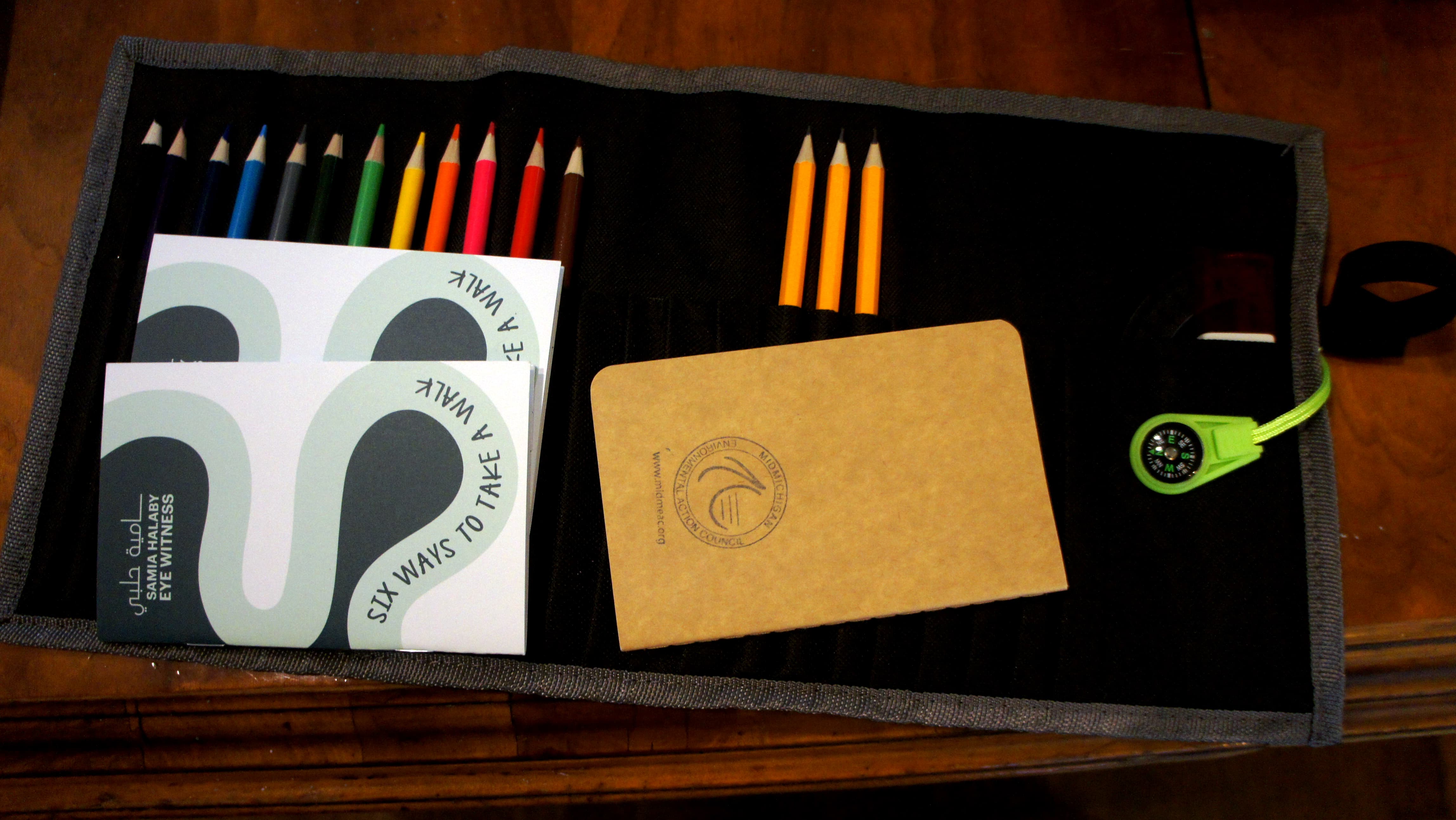
Our outdoor explorations were greatly enhanced when we were invited to join the Cornell Civic Ecology Lab Nature Education course. One of many exceptional speakers for the course provided rationale and resources for nature journaling. MidMEAC personnel sourced materials, assembled journal packs, and distributed them to Reaching Higher learners.
Students used journal materials to draw and write about their thoughts and observations. EGLE educators spoke with students about the importance of documenting scientific studies. “Recording data is a big part of what we do,” EGLE educator Boekestein shared. Journals allowed us to integrate art and language arts with water science / STEM education.
Lake Investigations in Michigan and Nature Observations (LIMNO)
LIMNO is an outdoor watershed educational program for learners of all ages, developed in 2022, in partnership with the National Oceanic and Atmospheric Administration (NOAA), MidMEAC, local Conservation Districts, and long-time environmental educator Dave Chapman. LIMNO is among our favorite offerings.
LIMNO training requires about 3 hours. Groups of 6–10 students rotate through activities:
- On-shore examinations including water quality testing, macroinvertebrate identification and classification, and microscopic viewing of lake-dwelling microorganisms.
- On-the-water sampling and land-use observations made via pontoon boat. We feel fortunate to have the use of the Michigan State University Sail Center and the services of a lakeside resident for the pontoon boat.
- Project F.I.S.H. (Friends Involved in Sportsfishing Heritage). Fishing experiences teach the importance of conservation and resource management.
- Nature walk. The Lake Lansing site we generally use contains a Green Infrastructure demonstration project. We enhance this with supporting materials that describe native plant species with deep roots that stabilize soils, slow water flow, and uptake nutrients and pollutants. We discuss biology, botany, and public infrastructure.
- Nature Journaling, an engaging activity that develops skills in science reporting, language arts, and art.
What’s Next for Reaching Higher
We hope to schedule LIMNO training for students from Mt. Hope STEM Reaching Higher. Personnel changes prevented us from getting them out earlier this year.
We will revisit a few lessons and models as a refresher for returning students and important information for new learners.
This fall, Reaching Higher students will be asked to participate in question/answer dialogue about watersheds. MidMEAC will record and broadcast an edited version of our discussions. The Lansing Public Media Center will help us complete the broadcast, sharing information required for the Meaningful Watershed Educational Experience (MWEE) action project.
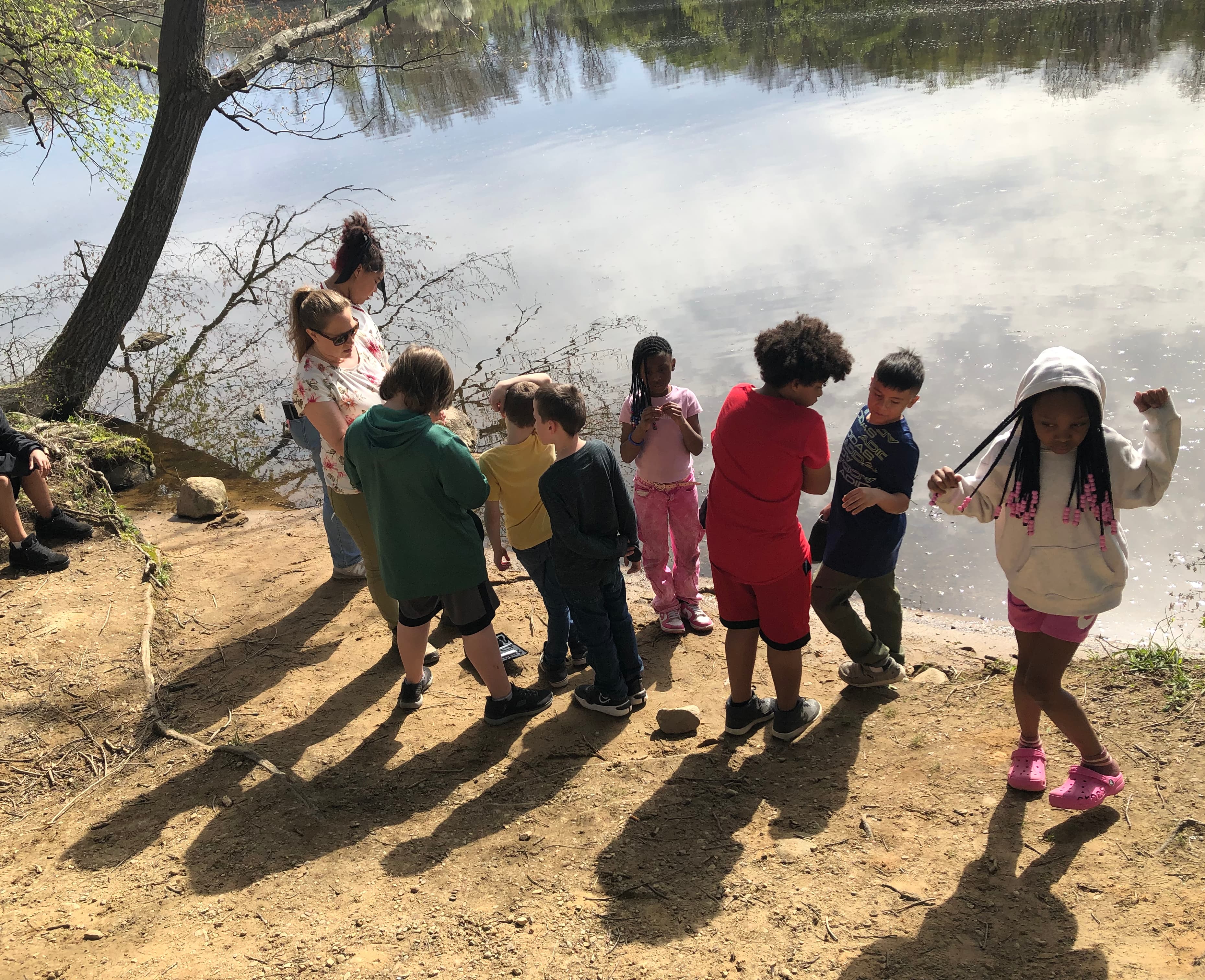
There’s a lot happening outdoors! We are grateful to all our partners helping to deliver a water science curriculum on and near the rivers and streams near our homes.
Partners include:
Highfields/Reaching Higher
Dave Chapman, educator and member of the Michigan Association of Environmental Professionals
E Boekestein and A. Daniels, Michigan Environmental Education Curriculum Support (MEECS)
Michigan State University, Sailing Center, Project F.I.S.H.
North American Association for Environmental Education
NAAEE, in collaboration with NOAA and supported by the U.S. Department of Education, is working with twelve environmental education organizations to offer engaging after-school watershed-focused STEM (science, technology, engineering, and mathematics) programs. The eeBLUE 21st Century Community Learning Centers Watershed STEM Education Partnership Grants, administered by NAAEE and running from 2024–2025, support environmental education organizations collaborating directly with 21st CCLC sites. These sites play a crucial role in designing and implementing locally relevant, out-of-school-time programs that develop students' environmental literacy and leadership skills as they improve their communities. These grants support programming for local Nita M. Lowey 21st Century Community Learning Centers (21st CCLC) sites and their students, many of whom live in underserved areas. The 12 selected projects serve 11 states, ranging from Hawai’i to Maine.
Join eePRO today and be a part of the conversation!
Comment and connect with fellow professionals in environmental education. Join eePRO >