Exploring AI Together: A Conversation for Environmental Educators







This webinar was recorded on December 17, 2025.
This engaging conversation highlights the opportunities and challenges of using AI in environmental education. Generative AI is transforming teaching and learning at a pace that is outrunning most of us, and this webinar will explore how we can use these tools responsibly and effectively.
Yue Li (University of Florida), Chris Agnew (Stanford University), Andrew Powers (Greentime.ai), and Ian Humphreys (Foundation for Environmental Education) talk through examples and strategies for integrating AI in ways that support learning and global education efforts, while keeping equity, ethics, the environment, and human-centered design in mind. This webinar covers topics such as reducing bias, protecting privacy, and adapting learning approaches as AI tools evolve.
Come away with useful ideas and new thinking—and we look forward to hearing your questions and how you’re experimenting with AI in your own work.
Speakers
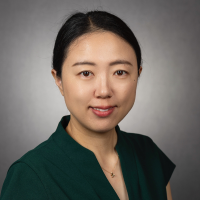
Dr. Yue Li is an Assistant Professor of Environmental Education in the School of Forest, Fisheries, and Geomatics Sciences at the University of Florida. Her research focuses on AI integration into environmental education, professional development for environmental educators, environmental action, and community engagement. Her recent projects explore the role of AI in empowering environmental educators and engaging audiences to advance environmental education practices. She also investigates how the Community Action Projects for the Environment (CAPE) framework can be applied to audiences ranging from youth to senior adults. Yue is also a fellow of the Florida Natural Resources Leadership Institute Class 25. At UF, she teaches Environmental Education Program Development and Conservation Behavior.
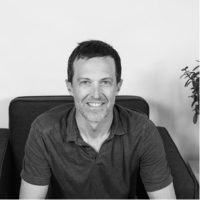
Chris Agnew leads the AI Hub for Education at the Stanford Accelerator for Learning. The Hub is a trusted source for education system leaders on what’s working (and what’s not), leveraging AI to benefit students and schools and to reimagine learning. Across 25 years in experiential and applied education, his career spans teaching and executive leadership roles across K12 and post-secondary settings. Environmental education has shaped his career from the beginning, spending formative years at NOLS and later serving five years as the Executive Director of the Teton Science Schools. Prior to Stanford, Chris led US higher ed strategy and credentials for Multiverse, an edtech startup using professional apprenticeships as an alternative to college and university.
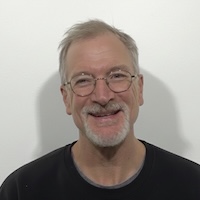
Andrew Powers is an AI Field Naturalist with Greentime.ai, where he helps mission-driven organizations explore and navigate AI adoption with practical, ethically-guided training. Drawing on 20 years as a co-founder of PEER Associates, a consultancy specializing in evaluation and organizational development for environmental education organizations, Andrew brings deep roots in the EE community to questions about AI's role in our work and lives. He's working toward a future where AI serves human flourishing rather than concentrating power in extractive systems, developing approaches that help organizations use AI without compromising their values or mission.
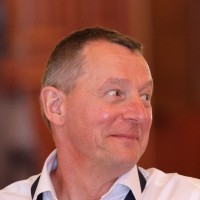
Dr. Ian Humphreys (Moderator) is a board member of the Foundation for Environmental Education, which supports Eco-Schools around the world, as well as several initiatives, including Young Reporters for the Environment and more. Ian is the former Executive Director of Keep Northern Ireland Beautiful (KNIB). He spent 14 years with The Conservation Volunteers before he joined KNIB. He has strong environmental and research credentials, including a PhD from The Queen's University of Belfast. At Keep Northern Ireland Beautiful, Ian helped oversee the rapid growth in Eco-Schools, with every school now participating. He has conducted research focusing on the effects of interventions on behaviour and developing civic leadership in young people, and is also involved in the running of Copeland Bird Observatory in a voluntary capacity.